


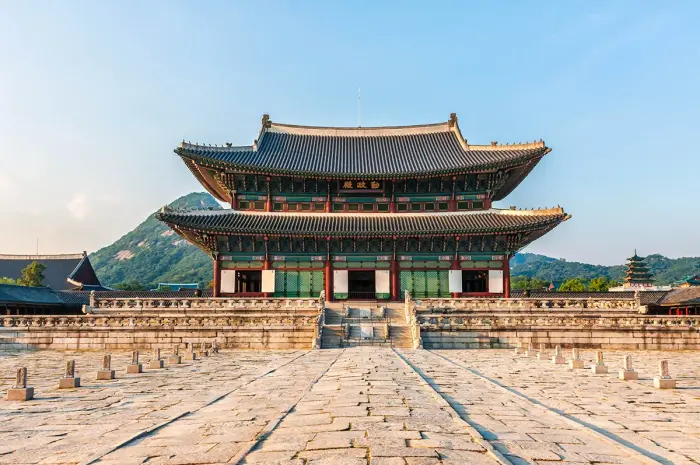
Gyeongbokgung Palace is a magnificent palace in South Korea that exudes the historical charm of the Joseon dynasty with its beautiful architecture and iconic views.
Gyeongbokgung Palace is one of the most iconic places in Seoul, South Korea, offering an immersive cultural and historical experience.
Known as the largest palace in Korea, Gyeongbokgung is not only a center of history and culture but also an important symbol of the glory days of the Joseon Dynasty.
Built in 1395, the palace played a huge role in Korean history, not only as a royal residence but also as a center reign for over five centuries.
Although much of the palace was damaged or destroyed during the Japanese colonial period, restoration efforts since the 1960s have restored much of the palace’s beauty and grandeur, making it one of Seoul’s top tourist destinations.
This article will takes you to dive into the history, attractions, activities, and facilities you can enjoy when visiting Gyeongbokgung Palace.
History of Gyeongbokgung Palace
Gyeongbokgung Palace was built in 1395 by King Taejo, the founder of the Joseon Dynasty, who decided to move the capital to Seoul after the beginning of the Joseon Dynasty.
It served as the main residence of the royal family for over five centuries, until the Japanese colonial period in the early 20th century, and is now one of the top Things to do in South Korea.
During the occupation, much of the palace was destroyed or looted by Japanese forces. However, in the 1960s, the South Korean government began a major restoration to restore the palace’s damaged structures and return Gyeongbokgung to its original form.
Although restoration is still ongoing, Gyeongbokgung Palace now stands proudly as an important cultural and historical site, giving visitors the opportunity to experience the grandeur of the past and learn more about Korea’s long history.
During its heyday, Gyeongbokgung Palace consisted of over a hundred buildings, courtyards, and pavilions constructed utilizing the principles of traditional Korean philosophy and design.
The architectural beauty of Gyeongbokgung, which combines symbolic and spiritual elements in its design, makes it a place full of meaning for the Korean people. Today, Gyeongbokgung Palace remains a highly revered place, both by locals and international visitors.
Attractions at Gyeongbokgung Palace
1. The Beauty of Traditional Korean Architecture
One of the main attractions of Gyeongbokgung Palace is its stunning traditional Korean architecture. The main buildings inside the palace, such as the Geunjeongjeon (main hall), are surrounded by large pillars with a distinctive curved roof design.
This design depicts the beauty and philosophy behind the palace structure which is not only visually beautiful but also has spiritual significance in the context of Korean culture.
Gyeongbokgung Palace is a perfect example of Joseon architecture that combines the harmony of nature and diverse symbolism in every detail of its design.
2. Gyeonghoeru Pavilion
Gyeonghoeru Pavilion is one of the most famous buildings in Gyeongbokgung Palace.
Located in the middle of a large pond in the southern part of the palace, this pavilion was used by the royal family to hold important events such as parties, banquets, and diplomatic meetings.
The beauty of Gyeonghoeru Pavilion surrounded by ponds and gardens provides a relaxing experience for visitors who come to enjoy its beauty.
Gyeonghoeru Pavilion is a perfect place for taking pictures, especially in spring or fall, when the colorful leaves add to its beauty.
3. Changing of the Guard
One of the most iconic experiences to enjoy at Gyeongbokgung Palace is the daily changing of the palace guards. Guards dressed in brightly colored traditional Korean costumes perform the changing of the guard ritual with great honor and pride.
The event takes place in front of the palace’s main gate and provides a deep insight into the history and culture of the Korean kingdom. Visitors can watch the procession for free, making it a major draw for those interested in Korean military history and culture.
4. Hyangwonjeong Pavilion and Garden
Hyangwonjeong Pavilion is a small pavilion located on the northern side of the Gyeongbokgung Palace complex, amidst beautiful gardens.
Surrounded by ponds and trees, the pavilion is a very peaceful and tranquil place, once used by the royal family to rest and enjoy the scenery.
The garden area around Hyangwonjeong is well-maintained and offers beautiful views, making it a perfect place to take a leisurely stroll and enjoy the tranquil atmosphere of the palace.
5. Gyeongbokgung National Museum and Folklore Museum
Gyeongbokgung Palace is also home to two major museums that offer insight into Korean history and culture, namely the Gyeongbokgung National Museum and the Folklore Museum.
The National Museum houses historical artifacts from the Joseon Dynasty, while the Folklore Museum depicts the daily life of Korean people in the past.
These two museums provide visitors with the opportunity to learn more about Korean culture, art, and history, making them a valuable addition to your Gyeongbokgung Palace experience.
Route to Gyeongbokgung Palace
Gyeongbokgung Palace is located at 161 Sajik-ro, Sejongno, Jongno-gu, Seoul, South Korea.
The location of this palace is very accessible to tourists and is located in the center of Seoul, close to many other tourist attractions such as Bukchon Hanok Village and Cheonggyecheon Stream.
To get to Gyeongbokgung Palace using public transportation, you can take subway Line 3 and get off at Gyeongbokgung Station (Exit 5).
From the station, you only need to walk about 5 minutes to reach the main gate of the palace. If you prefer to take the bus, there are many public bus lines that pass by Gyeongbokgung Palace, making it easy to reach this location.
Entrance Ticket Prices and Operating Hours
Ticket prices to visit Gyeongbokgung Palace are very affordable, and allow visitors to explore the entire expansive palace complex.
Adult admission tickets cost around ₩3,000 (about $3 USD), while tickets for children or students can be purchased at a cheaper price. There are also combination tickets that allow you to visit several palaces in Seoul at a more economical price.
Gyeongbokgung Palace is open every day, except Monday, from 09:00 to 18:00 WIB. However, operating hours may change depending on the season or special events, so be sure to check the latest schedule before planning your visit.
Interesting Activities to Do
1. Take an Audio Tour or Tour Guide
If you want to know more about the history of Gyeongbokgung Palace, you can take an audio tour or a guided tour. This tour provides in-depth insight into each part of the palace, as well as the history and culture behind it.
A professional tour guide will share fascinating stories about the palace, the kings, and Korean culture, making your experience even more memorable.
2. Watch the Changing of the Palace Guard Ceremony
The changing of the guard ceremony at the main gate of the palace is a must-see event.
This ceremony takes place twice a day and gives visitors the opportunity to witness how guards dressed in traditional Korean clothing carry out their duties with great honor. This was a very interesting and educational experience.
3. Explore the Parks and Squares
In addition to exploring the main buildings, you can also spend time walking around the gardens around Gyeongbokgung.
There are many beautiful garden areas to enjoy the fresh air and views of the palace, such as the gardens around Gyeonghoeru Pavilion and Hyangwonjeong Pavilion. Walking here gives you the opportunity to enjoy the peaceful atmosphere and natural beauty.
4. Take a photo with a Hanbok costume
Many visitors enjoy the experience of wearing a hanbok, the traditional Korean dress, at Gyeongbokgung.
You can rent a hanbok near the palace and take pictures at various interesting spots inside the palace. It’s a fun way to experience a bit of Korean royal culture while taking pictures with the magnificent building in the background.
5. Visiting the Museum Inside the Palace
Don’t miss the opportunity to visit the National Museum and Folklore Museum located within the Gyeongbokgung Palace complex.
Both museums offer fascinating exhibits about Korean history and culture, from historical artifacts to the daily lives of Korean people in the past.
Facilities Available in the Gyeongbokgung Palace Area
1. Visitor Information Center
The information center located near the main entrance of the palace provides useful information about Gyeongbokgung, including maps and tour schedules.
The friendly staff is also ready to assist visitors with additional information on places to visit around the palace grounds.
2. Toilet and Rest Area
Gyeongbokgung Palace is equipped with clean and comfortable toilets at various points within the area. A rest area is also available for visitors who want to take a break after walking around the palace.
3. Cafeteria and Souvenir Shop
There are several cafes around the palace complex serving snacks and drinks for visitors who want to take a break. In addition, you can visit souvenir shops that sell various typical items, such as miniature hanbok or small Merlion statues.
4. Free Wi-Fi and Photography Area
Gyeongbokgung Palace also provides free Wi-Fi access in some areas, making it easy for visitors to share their experiences directly. Many areas within the palace are also very photogenic, with plenty of opportunities to take pictures against stunning backdrops.
Gyeongbokgung Palace is a must-visit if you are in Seoul. With its rich history, magnificent architecture, and many exciting activities to do, the palace offers a truly rewarding experience.
Don’t miss out on watching the changing of the guard ceremony, wearing a hanbok, and exploring the beautiful museums and gardens, all among the top Tourist Attractions in Seoul, South Korea.
With complete facilities and easy access, Gyeongbokgung Palace is a cultural destination that will give you an unforgettable experience.
